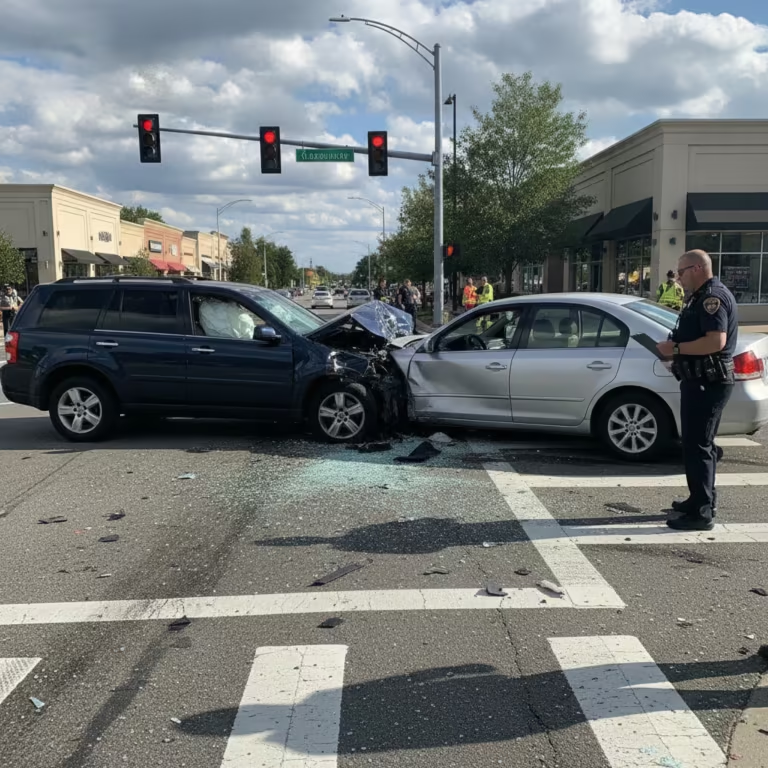
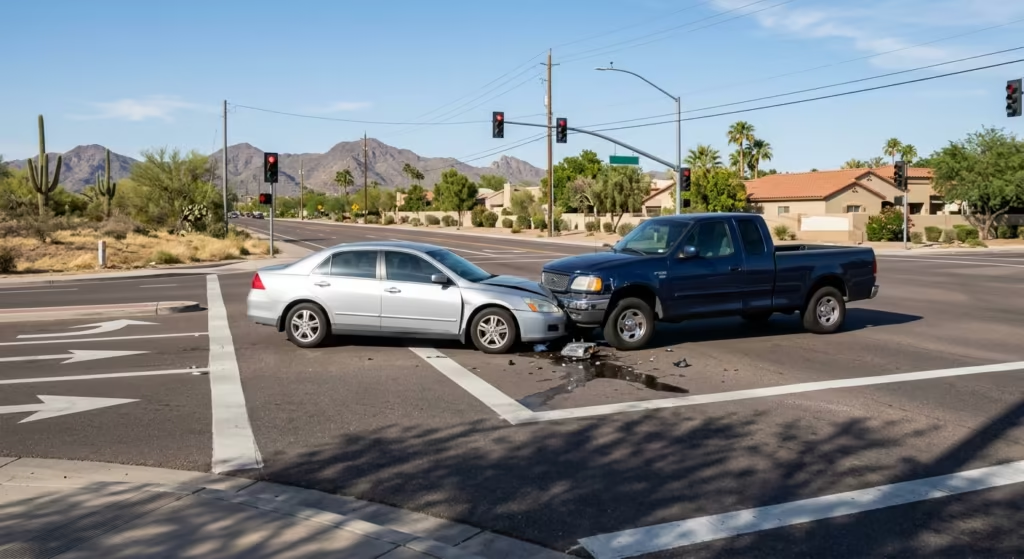
A left‑turn collision is one of the most common types of intersection accidents in Arizona. Although the left‑turning driver is often presumed at fault, insurance companies frequently try to shift responsibility onto the driver going straight, hoping to reduce their payout. This blog explains how these cases really work under Arizona law, why insurers take this approach, and how Thomas Law PLLC helps clients protect their rights after a crash.
Below is a detailed, practical guide for anyone involved in a left‑turn collision in Scottsdale, Phoenix, or the surrounding areas. We draw on our experience as personal injury attorneys and our background in litigation to help you understand what really determines fault—and how to respond when an insurance company unfairly blames you.
How Left‑Turn Collisions Typically Occur in Arizona
In Arizona, left‑turn collisions most often happen when a driver attempts to turn across oncoming traffic at an intersection. The left‑turning driver must yield to oncoming vehicles that are close enough to create an immediate hazard. Because of this, liability in these crashes often appears straightforward: the turning driver didn’t yield, so they’re responsible.
However, insurance companies rarely accept liability without a fight. Even when their insured was turning left, they may argue the oncoming driver was speeding, distracted, or otherwise contributed to the crash. As personal injury lawyers serving the greater Phoenix area, we regularly see insurers use these tactics to minimize claims.
Why Insurance Companies Try to Blame the Non–Left‑Turning Driver
Arizona follows a comparative negligence system, meaning fault can be shared between drivers. If an insurer can even shift 10–20% of the blame to the non‑turning driver, it can significantly reduce the payout. Because of this, insurers frequently claim that the driver going straight:
- Was speeding through the intersection
- Ran a yellow or red light
- Was distracted by a phone or navigation device
- Failed to take evasive action
- Was driving aggressively or unpredictably
Even without evidence, an insurance adjuster may push these arguments early in the claims process. They often hope the claimant will accept partial fault or give a statement that can later be used against them.
Understanding Arizona’s Rules for Left‑Turn Liability
Under Arizona Revised Statutes § 28‑772, a driver making a left turn must yield to oncoming traffic that is close enough to be an immediate hazard. The law places a clear duty on the turning driver, and violations often lead to a presumption of fault.
However, insurers exploit ambiguity whenever they can. They may argue that the oncoming driver was far enough away that a reasonable driver could have completed the turn safely—or that the oncoming driver created a hazard through negligent behavior. As a Scottsdale attorney with litigation experience, Fred Thomas routinely counters these arguments by gathering objective evidence early in the case.
Evidence That Helps Establish Fault in Left‑Turn Collisions
When an insurer tries to shift blame, evidence becomes critical. The following information often determines who is truly responsible:
- Traffic camera or intersection video footage
- Vehicle damage patterns
- Skid marks and roadway debris
- Witness statements
- Event data recorder (“black box”) information
- Police diagrams and officer conclusions
We also evaluate weather, roadway design, visibility, and traffic signal sequencing. These details often reveal that the oncoming driver had the right of way and no reasonable opportunity to avoid the collision.
How Insurance Adjusters Pressure Injured Drivers
When we represent clients in Scottsdale and Phoenix, we often see insurance companies immediately attempt to obtain a recorded statement. Their goal is to lock you into statements that can later be misconstrued. Adjusters may ask leading questions such as:
- “How fast were you going?”
- “Did you see the other driver before impact?”
- “Do you think you could have stopped?”
While these may seem harmless, they are carefully designed to shift blame toward the non‑turning driver. As a Phoenix lawyer with experience in civil litigation and appellate practice, we advise clients never to give recorded statements without legal counsel.
Medical and Financial Consequences of Left‑Turn Crashes
Left‑turn collisions often occur at full speed, leading to serious injuries such as:
- Neck and back trauma
- Concussions and traumatic brain injuries
- Broken bones
- Shoulder and knee injuries
- Airbag deployment injuries
These accidents can lead to substantial medical bills, lost wages, and long‑term rehabilitation needs. Unfortunately, when insurance companies shift blame, they also dispute medical treatment, argue that injuries are pre‑existing, or offer settlements far below the true value of the claim.
How Thomas Law PLLC Protects Drivers After Left‑Turn Accidents
As a personal injury law firm serving Scottsdale and the greater Phoenix area, Thomas Law PLLC takes a meticulous approach to these cases. With Fred Thomas’s background as a judge pro tem and his experience across personal injury, civil litigation, and medical malpractice, we know how to build a strong case and counter misleading insurance tactics.
Our approach typically includes:
- Obtaining and preserving critical accident evidence
- Consulting accident reconstruction experts when necessary
- Handling all communication with insurance companies
- Challenging improper fault allocations
- Documenting medical treatment and long‑term impact
- Pursuing compensation through settlement or litigation when appropriate
FAQ
Who is usually at fault in a left‑turn accident?
In Arizona, the left‑turning driver is usually considered at fault because they must yield to oncoming traffic. However, insurers may still try to assign partial fault to the oncoming driver, which is why legal representation is important.
Can both drivers share fault?
Yes. Arizona’s comparative negligence laws allow fault to be divided between drivers. Insurers often attempt to use this to reduce payouts, even when the oncoming driver did nothing wrong.
What if the insurer claims I was speeding?
Speed allegations are common and often unsupported. Evidence such as skid marks, vehicle damage, and video footage can disprove these claims. An attorney can help gather and interpret this evidence.
Should I give the insurance company a recorded statement?
No. These statements are designed to protect the insurer, not you. Contact a personal injury attorney before speaking with any adjuster.
Do I need a lawyer for a left‑turn collision claim?
Because insurers frequently dispute fault, having legal representation strengthens your case and helps ensure that you receive fair compensation for your injuries and losses.
If you were involved in a left‑turn collision in Scottsdale, Phoenix, or the surrounding areas, Thomas Law PLLC is ready to help you navigate the process and protect your rights.